

Skin tags and warts are common concerns that many patients want removed because they rub against clothing, catch on jewellery, or feel uncomfortable cosmetically. A proper doctor check is important before removal so the growth can be identified correctly.
Depending on the type, size, and location of the growth, removal may be planned using methods such as cautery, radiofrequency, or laser. The aim is safe removal with simple healing and clear aftercare.
- Neck and underarm skin tags
- Raised warts on face or body
- Growths rubbing against clothing
- Visible lesions causing discomfort
- Multiple small tags in friction areas
- Need for quick doctor-led removal
Common concerns it addresses
Patients usually choose this procedure when the growth is becoming irritating in daily life or when they no longer want to cover or ignore it.

overview
Useful for skin tags, selected warts, and small raised growths that are visible or physically irritating.

procedure details
The area is examined first and the suitable removal method is chosen. Local numbing may be used when needed.

benefits
Removal is usually quick, planned properly, and done with attention to healing and comfort.

aftercare
Keeping the area clean, dry, and untouched while using the advised ointment helps it heal better.
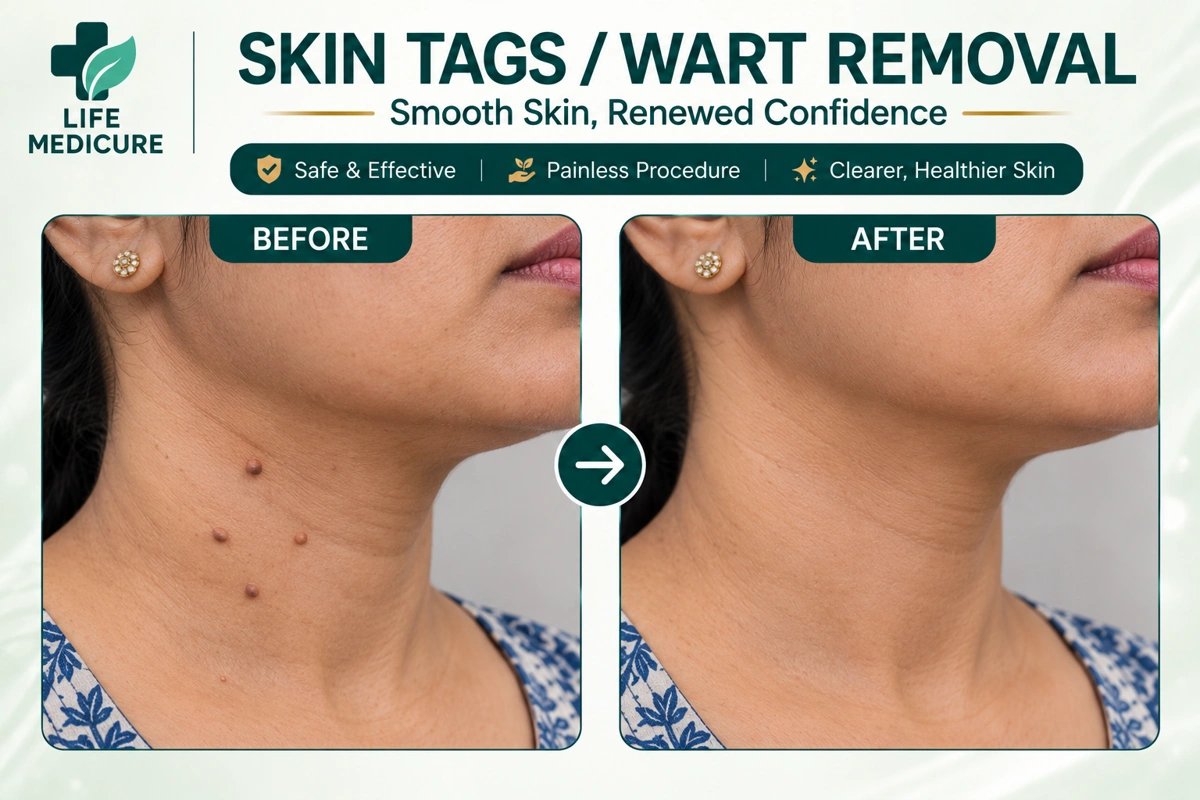
Benefits and aftercare
Many removals are done as quick clinic procedures, but proper diagnosis and aftercare are still important. The doctor also checks if there is any need for follow-up, especially in case of warts.

20 min
usual session time

1 to 2
sessions may be enough

7 days
for simple healing care
Frequently asked questions
In many cases yes, although multiple or larger growths may need more planning.
Most patients tolerate it well, and numbing support may be used depending on the area and method.
Healing differs from person to person, but following aftercare properly helps the area settle more smoothly.
Some warts can recur, which is why doctor review and correct aftercare remain important.
No. Home attempts can cause bleeding, infection, and unnecessary scarring, so doctor-led removal is much safer.
 Acne care | Pigmentation treatment | Hydrafacial | Laser hair reduction | Doctor-led skin plans