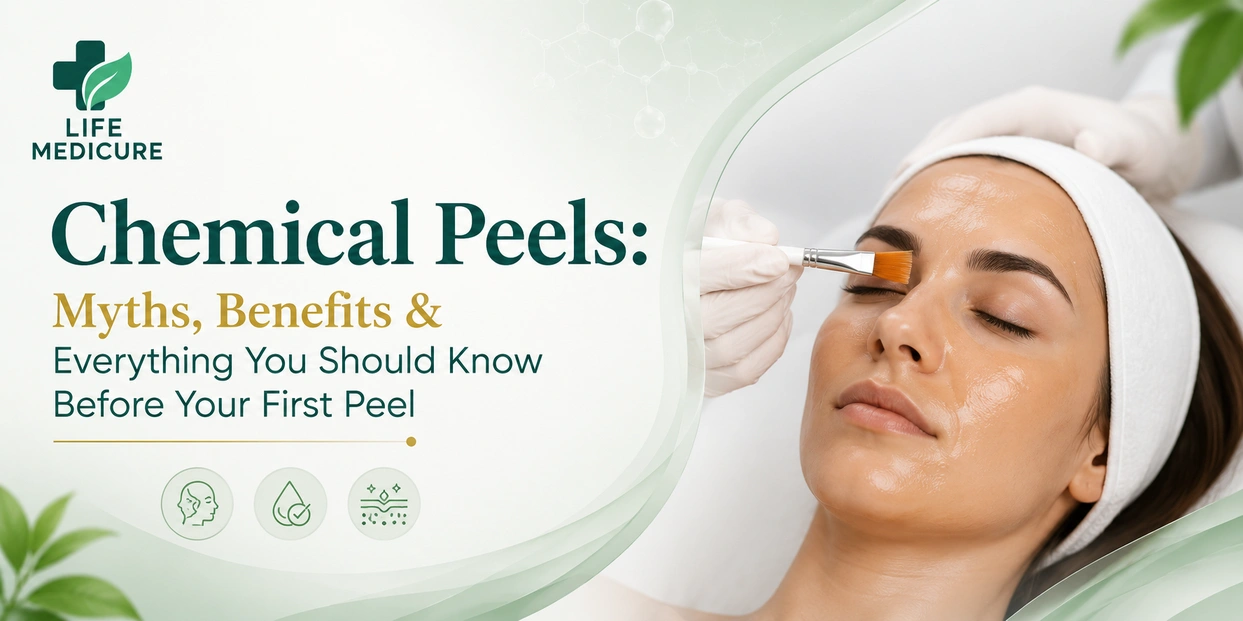
"Doctor, will a chemical peel burn my face?"
This is probably the first question I hear whenever I suggest a chemical peel to a patient.
Some patients worry that the word "chemical" means the treatment is harsh or unsafe. Others have seen dramatic videos online where skin peels for days, making them think every peel is painful.
The truth is quite different.
Modern chemical peels, when chosen correctly and performed by a trained medical professional, are among the safest and most effective treatments for improving skin health. They have been used in dermatology for decades to treat acne, pigmentation, sun damage, dull skin, and early signs of ageing.
At Life Medicure , we believe that patients should understand the science behind a treatment before deciding to undergo it. An informed patient is always more confident and more likely to achieve the best results.
What Exactly Is a Chemical Peel?
A chemical peel is a medical skin treatment in which a specially formulated solution is applied to the skin for a controlled period. This solution gently removes dead and damaged surface cells, allowing fresh, healthier skin to emerge.
Our skin naturally sheds old cells every few weeks. A chemical peel simply helps this renewal process happen in a more controlled and effective way.
The goal is not to "damage" the skin—it is to encourage healthier skin regeneration.
Why Is It Called a "Chemical" Peel?
The name often creates unnecessary fear.
Everything around us is made of chemicals—including water and oxygen. In skincare, the word "chemical" simply refers to ingredients that have a specific scientific action on the skin.
Interestingly, many peeling agents come from natural sources:
- Glycolic Acid – extracted from sugarcane
- Lactic Acid – derived from milk
- Mandelic Acid – obtained from bitter almonds
- Citric Acid – found in citrus fruits
- Salicylic Acid – originally sourced from willow bark
These ingredients are purified, carefully tested, and used in medical concentrations to ensure predictable and safe results.
So, while the treatment is called a chemical peel, many of its active ingredients originate from nature.
What Problems Can Chemical Peels Treat?
Chemical peels are versatile and can help improve many common skin concerns, including:
- Acne and oily skin
- Post-acne marks
- Pigmentation
- Melasma
- Sun damage
- Tanning
- Dull complexion
- Uneven skin tone
- Rough skin texture
- Fine lines and early signs of ageing
- Enlarged pores
The type and strength of the peel are selected based on your skin type, concerns, and medical history.
Different Types of Chemical Peels
Not every peel is the same. At Life Medicure Hospital, we select the peel that best matches your skin.
Glycolic Peel
Ideal for dull skin, tanning, uneven skin tone, and improving skin texture.
Salicylic Peel
Excellent for oily and acne-prone skin. It helps unclog pores and reduce excess oil.
Mandelic Peel
A gentle peel suitable for sensitive skin and certain pigmentation concerns.
Lactic Peel
Provides mild exfoliation while improving hydration and skin brightness.
Combination Peels
For patients with multiple concerns, carefully selected combinations can address acne, pigmentation, and uneven texture together.
Common Myths About Chemical Peels
Myth 1: "Chemical Peels Are Extremely Painful"
Reality: Most chemical peels are very well tolerated.
During the procedure, you may feel mild tingling, warmth, or a slight stinging sensation for a few minutes. This is expected and usually settles quickly.
Most patients describe the treatment as mildly uncomfortable rather than painful.
Myth 2: "The Peel Will Burn My Skin"
Reality: A medically supervised chemical peel is designed to work in a controlled manner.
Your doctor carefully selects the type, strength, and application time based on your skin. When performed correctly, it should not cause uncontrolled burning or permanent damage.
Myth 3: "My Face Will Become Dark After the Peel"
Reality: This is one of the biggest misconceptions.
Immediately after treatment, some people may notice slight redness or dryness. In the following days, mild peeling or flaking may occur depending on the type of peel used.
As the skin heals, it often looks smoother, fresher, and brighter.
Temporary darkening can occasionally occur if aftercare instructions are not followed, especially if the skin is exposed to sunlight without adequate sunscreen. This is why post-treatment care is just as important as the procedure itself.
Myth 4: "My Skin Will Peel Off in Large Sheets"
Reality: Not always.
Many modern peels cause only microscopic exfoliation. Some patients notice visible flaking, while others experience almost no peeling at all.
The amount of peeling is not a measure of how effective the treatment is.
Myth 5: "Chemical Peels Thin the Skin"
Reality: This is false.
Properly performed peels remove damaged surface cells while stimulating healthier skin renewal. Over time, they can improve skin quality, texture, and overall appearance.
Myth 6: "Chemical Peels Are Only for Women"
Reality: Healthy skin is important for everyone.
Many men choose chemical peels to improve acne, oiliness, pigmentation, tanning, and rough skin.
Will My Face Glow After a Chemical Peel?
One of the questions I hear most often is:
"Doctor, will my face glow after the peel?"
The answer is yes—but the glow comes from healthier skin, not from bleaching or artificial whitening.
As damaged skin cells are replaced by newer, healthier cells, many patients notice:
- A brighter complexion
- Improved skin texture
- Better hydration
- More even skin tone
- Softer, smoother skin
- A refreshed appearance
A chemical peel does not permanently change your natural skin colour. Instead, it helps reveal healthier skin by reducing dullness, tanning, and uneven pigmentation.
Does Everyone Need a Strong Peel?
Absolutely not.
One of the biggest mistakes is assuming that a stronger peel gives better results.
In reality, the best peel is the one that matches your skin.
A gentle peel repeated over time often provides safer and more consistent improvement than an unnecessarily aggressive treatment.
What Happens During a Chemical Peel Session?
A typical appointment at Life Medicure Hospital includes:
- A detailed consultation
- Skin analysis
- Cleansing of the skin
- Application of the selected peel
- Neutralization (when required)
- Soothing products and sun protection
- Aftercare instructions
Most sessions are completed within 20 to 30 minutes.
What Makes Chemical Peels at Life Medicure Hospital Different?
At Life Medicure Hospital, we don't believe in a "one-size-fits-all" approach.
Every patient's skin is unique, and every peel is selected only after understanding your skin type, lifestyle, medical history, and treatment goals.
Our Chemical Peel Program Includes:
✔ Detailed consultation with Dr. Taranjyot Juneja
✔ Scientific skin assessment before every procedure
✔ Selection from a range of medical-grade peels for acne, pigmentation, tanning, ageing, and sensitive skin
✔ Customized treatment plans rather than standard protocols
✔ Strict hygiene and safety standards
✔ Personalized skincare recommendations to support long-term results
✔ Combination therapies when appropriate, including Korean HydraFacial, microneedling, laser treatments, or prescription skincare
✔ Follow-up care to monitor your progress and adjust treatment as needed
Our aim is not simply to improve how your skin looks after one session, but to help you build healthier skin over time.
How Should You Care for Your Skin After a Peel?
Proper aftercare plays an important role in achieving the best results.
For a few days after your peel:
- Apply sunscreen every morning.
- Keep your skin well moisturized.
- Avoid picking or peeling any flaking skin.
- Avoid harsh scrubs or exfoliating products.
- Limit prolonged sun exposure.
- Use only the skincare products recommended by your doctor.
These simple steps help your skin heal comfortably and reduce the risk of unwanted pigmentation.
A Message from Dr. Taranjyot Juneja
Chemical peels are not about changing who you are—they're about helping your skin become healthier.
When performed after a proper skin assessment and combined with good skincare habits, chemical peels can safely improve acne, pigmentation, dullness, and overall skin texture.
At Life Medicure Hospital, every treatment begins with listening to your concerns and understanding your skin. My goal is to recommend treatments that are evidence-based, safe, and tailored specifically to you.
Healthy skin is not achieved through shortcuts. It comes from consistent care, realistic expectations, and the right medical guidance.
Visit Life Medicure Hospital
Life Medicure Hospital – Skin, Hair & Aesthetics
Consultant:
Dr. Taranjyot Juneja
(AIIMS Rishikesh)
Near Juneja Medical Hall, 8 Marla Puli, Jattal Road, Panipat, Haryana – 132103
WhatsApp & Appointments: +91 99915 07579
If you're considering a chemical peel but aren't sure which treatment is right for you, schedule a consultation. We'll assess your skin, answer your questions, and create a treatment plan that's tailored to your needs.
