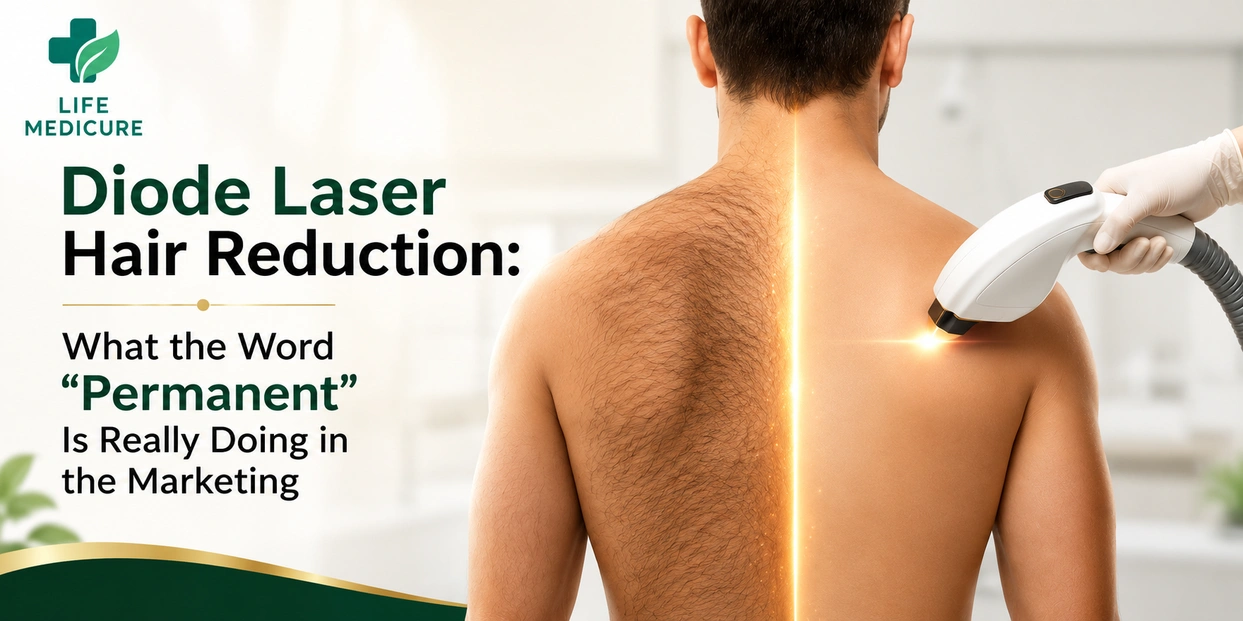
Diode Laser Hair Reduction: What the Word "Permanent" Is Really Doing in the Marketing
Laser hair removal — diode laser, specifically — is probably the single most requested light-based cosmetic procedure in the world, and it's easy to see why. The pitch is simple: a few sessions, and you're done with shaving, waxing, and ingrown hairs forever. "Permanent hair removal" is printed on clinic windows, spa menus, and Instagram ads everywhere.
That word — permanent — deserves a hard second look before you commit to a treatment plan, a payment package, or a multi-session bundle. Not because diode laser technology doesn't work; it genuinely does, and it's one of the better-evidenced procedures in the aesthetic world. But there's a meaningful, well-documented gap between "permanent hair removal" as it's marketed and "permanent hair reduction" as it actually performs in the clinical literature — and the difference between those two phrases is exactly the kind of thing a skeptical patient should understand before signing up for eight sessions.
What Diode Laser Actually Does
Diode lasers work on a principle called selective photothermolysis. The laser emits a specific wavelength of light — typically in the 800–810 nm range, sometimes combined with additional wavelengths like 755 nm or 1064 nm in newer multi-wavelength systems — that's preferentially absorbed by melanin, the pigment that gives hair (and skin) its color.
When that light hits a hair follicle, it converts to heat, damaging the follicle's ability to produce new hair. Because melanin absorbs this wavelength range more efficiently than surrounding tissue, the theory is that the hair follicle takes the thermal hit while the surrounding skin is relatively spared.
This is genuinely well-established science, not a fringe technology. It's been used in dermatology clinics for over two decades, has a large body of peer-reviewed research behind it, and is broadly considered one of the safer and more effective hair-reduction technologies available — particularly compared to older or less targeted approaches like IPL (Intense Pulsed Light).
The Word Games: "Removal" vs. "Reduction"
Here's the detail that gets buried in glossy marketing copy: hair grows in distinct cycles — anagen (active growth), catagen (transition), and telogen (resting) — and at any given time, only a portion of the hair follicles on a treated area are actually in the growth phase where the laser can effectively damage them.
That's the entire reason multiple sessions are required in the first place. Each visit only catches the follicles that happen to be in the right phase at that moment, which is why treatments are typically spaced four to eight weeks apart over a course of several months.
Even with a completed course, the honest clinical consensus is that lasers rarely provide a permanent cure for hair growth in the sense of "hair will never grow there again." The more accurate term is permanent hair reduction, meaning a significant and long-lasting decrease in hair quantity, thickness, and pigmentation rather than guaranteed lifelong hair-free skin.
Clinical studies commonly report:
- Average hair reduction of 70–90% after a complete professional treatment course (typically 6–8 sessions).
- One study reported 44%–65% hair reduction after 12 months, with only 31% of participants achieving complete hair removal.
- Facial hair studies generally show around 66% reduction with high long-term patient satisfaction.
None of this makes diode laser a poor treatment. A 70–90% reduction in hair growth is life-changing for many people. But it's very different from promising hair will never grow again.
The Complication the Brochures Skip: Paradoxical Hypertrichosis
One uncommon but genuine complication is paradoxical hypertrichosis (PH).
Instead of reducing hair growth, laser treatment can occasionally stimulate new hair growth in or around the treated area. The new hair may become thicker, darker, or denser than before.
The proposed explanation is that subtherapeutic energy levels may stimulate dormant follicles instead of destroying them.
Published estimates vary:
- Reported incidence ranges between 0.6% and 10%.
- A retrospective study involving 7,381 patients reported an overall rate of only 0.34%.
- Patients with darker skin tones, PCOS, thick hair, or insufficient treatment energy appear to carry higher risk.
Although uncommon, patients should understand this possibility before beginning treatment, particularly if hormonal conditions are involved.
Other Risks Worth Knowing
Like every medical procedure, diode laser hair reduction has potential side effects.
Common Side Effects
- Temporary redness (erythema)
- Mild swelling
- A sensation similar to sunburn
Less Common Complications
- Blisters
- Burns
- Crusting
- Hyperpigmentation
- Hypopigmentation
- Folliculitis
- Reticulate erythema
- Eye injury if proper protection is not used
Most complications remain uncommon when treatment is performed by experienced professionals using appropriate settings.
Skin Tone and Hair Color: The Honest Limitations
Diode lasers target melanin inside the hair follicle. Because of that, treatment works best when there is clear contrast between hair color and surrounding skin.
The ideal candidate generally has:
- Dark, coarse hair
- Light to medium skin tone
Darker skin tones can also be treated safely using modern diode systems with appropriate cooling technology, but settings must be carefully adjusted by experienced providers.
Light blonde, grey, white, or red hair usually responds poorly because these hairs contain very little melanin for the laser to target.
The Genuine Advantages of Diode Laser Hair Reduction
Despite the marketing exaggerations, diode laser treatment offers several genuine advantages.
- More than 20 years of scientific research supporting its effectiveness.
- Fast treatment sessions for large body areas.
- Long-term reduction in shaving and waxing expenses.
- Reduced ingrown hairs and folliculitis.
- Suitable for multiple treatment areas including face, underarms, bikini, chest, legs, and back.
- Minimal downtime after each session.
Frequently Asked Questions
Is diode laser hair removal actually permanent?
Not in the literal sense. The more accurate medical term is permanent hair reduction, meaning substantial long-term reduction rather than guaranteed lifelong removal.
How many sessions will I need?
Most patients require 6–8 sessions, spaced approximately four to eight weeks apart. Individual factors like hormones, hair thickness, and treatment area influence the exact number.
Does diode laser treatment hurt?
Most people describe it as feeling similar to a rubber band snapping against the skin. Modern cooling systems significantly improve comfort during treatment.
Can people with dark skin safely receive treatment?
Yes. Modern diode systems allow treatment of darker skin tones, provided experienced practitioners use appropriate wavelengths and treatment settings.
Will laser work on blonde, grey, or red hair?
Usually not very well. Since these hairs contain little melanin, laser energy cannot effectively target the follicle.
How does diode laser compare with IPL?
Diode laser uses a focused wavelength specifically targeting hair follicles, generally providing more predictable and effective results than IPL for most patients.
How much should I budget?
Instead of focusing on the price per session, ask about the total cost for the complete treatment course, including possible maintenance sessions.
How do I choose a good provider?
- Ask what laser technology they use.
- Confirm experience with your skin type.
- Ask whether a test patch will be performed.
- Avoid clinics guaranteeing 100% permanent removal.
The Bottom Line
Diode laser hair reduction remains one of the most scientifically supported cosmetic procedures available today. It delivers substantial, long-lasting hair reduction for suitable candidates and can dramatically reduce shaving, waxing, and ingrown hairs.
However, patients should understand that "permanent hair removal" is largely a marketing phrase. The evidence supports permanent hair reduction, not guaranteed lifelong hair-free skin.
Before beginning treatment, understand your skin type, hair color, expected number of sessions, possible maintenance treatments, and potential risks. Choosing an experienced dermatologist and a reputable clinic plays an equally important role in achieving safe and satisfying results.
If you're considering diode laser hair reduction and want expert guidance based on your individual skin and hair type, Life Medicure offers consultations with experienced dermatologists who can assess your suitability, recommend the most appropriate treatment plan, and perform a test patch when required. Whether you're exploring laser hair reduction for the first time or seeking a second opinion, scheduling a professional consultation is the best way to make an informed decision.
